


Play Therapy: Helping children through play
Unlike adults, children can’t always put their feelings into words. Children naturally make sense of their world through play.
When they feel stuck, play therapy helps them work through challenges in a way that is safe, meaningful, and effective.
Play Therapy may support children who are experiencing:
Big feelings
Difficulty managing anger, frustration, sadness or other strong emotions.
Worries & anxiety
Fears, worries, uncertainty or difficulty feeling safe and secure.
Changes & transitions
Family changes, separation, starting school or other significant life changes.
Confidence & self-esteem
Low confidence, difficulty trying new things or becoming easily discouraged.
Relationships & behaviour
Difficulties with relationships, communication or behaviours that are challenging for children and their families.

What is Play Therapy?
-
Play Therapy engages children’s innate, creative, and non-verbal capacities, providing a powerful way to work with them therapeutically. Through play therapy, children can explore their inner and real-life experiences in a way that fosters insight and growth. It allows them to express emotions, regulate their feelings, practice new skills, and master challenges in a supportive environment.
There are many different types of play therapy. At The Play Therapist clinic, all services are exclusively aligned with the Child-centred Play Therapy model. This approach is particularly effective for counseling children with social, behavioral, and emotional challenges.
Child-Centred Play Therapy offers children the time, tools, and opportunities to process their feelings, build confidence, understand others, and learn more effective ways to express themselves. This model is grounded in the belief that children possess the ability to engage in their own self-work and make lasting positive changes in their lives.
-
In a Child-Centred Play Therapy session the therapist interacts with the child in ways that allows them to freely express their feelings and to take responsibility for solving their own problems. During the session the child is granted the freedom and responsibility for directing the therapy session, deciding what is played and how it is played. The child is provided with toys to play out and process their thoughts, desires and feelings. During play sessions children are free to express themselves, practice new skills, try out new identities and process what is happening in their world.
The play therapist is equipped with many skills to support the child’s therapy journey and develop their problem solving and coping skills. This can look like; reflecting the child’s feelings to build their emotional vocabulary, encouraging them to develop their sense of ownership and responsibility, and providing limits when necessary to develop self-control.
The child leads the session and without directives from the therapist explores the themes and issues they are struggling with. For example, a child experiencing bullying at school will put themselves in a position of power to experience what this is like. This allows the child to process and make sense of their feelings about what is happening in their world.
-
Your child will learn to trust themselves, have confidence in their skills and abilities and be better able to cope with life’s challenges. They will be better able to:
Identify their emotions and express themselves
Cope and know they can trust themselves.
Understand themselves and others
more regulated and improved self-control.
Interact with family members and peers.
Build resilience, being able to handle harder things.
-
Families play an important role in their child’s therapy journey. The relationship you have with your child provides an important foundation for therapeutic change, and the support you provide at home can help reinforce the skills and experiences explored during therapy.
For families accessing Play Therapy
Parent consultations will be scheduled regularly throughout your child’s therapy journey. These consultations provide an opportunity to discuss your child’s progress, explore what you are noticing at home, and consider practical ways you can support your child outside of sessions.
For families accessing Parent/Guardian-Only consultations
Each consultation is tailored to the specific challenges and concerns you are experiencing with your child. Together, we will explore practical strategies through a Child-Centred Play Therapy lens. Sessions are scheduled as needed, with each consultation building on the strategies and skills discussed previously.
For families accessing the Parent-Led Home Play Therapy Program
Each week, we explore a new skill and principle from the Child-Centred Play Therapy model, giving you the knowledge and confidence to facilitate play sessions with your child at home. Through this process, you will experience the principles of Play Therapy first-hand while strengthening your understanding of your child and deepening your relationship with them.
For more information about these support options, please visit the Services page or email admin@theplaytherapist.com.au
-
When children notice they are different from their peers—whether due to physical differences, abilities, the way they play, or how they cope—it can create significant emotional and behavioural challenges. They may feel frustrated that things seem easier for their peers or siblings, and struggle with feelings of inadequacy. This can lead them to believe something is wrong with them, fostering negative self-talk and a poor self-image.
When children experience this sense of difference, especially from a disorder, diagnosis, or disease, it can have a significant impact on their self-esteem. A child with low self-esteem will feel unsure of themselves and their abilities, can withdraw from social interactions or be easily led by peers, it can lead to self-defeating behaviours and emotional struggles.
While we cannot take away a diagnosis or disorder, we can help children become better equipped to manage the challenges they face. Through Play Therapy, children develop coping skills that will help them navigate life’s difficulties. They will learn to trust in their ability to handle tough situations and feel more confident in themselves. This will enable them to engage in more self-enhancing behaviours and understand that their diagnosis or disorder does not define their value.
To learn more about how Play Therapy supports children with neurodivergence visit the Neurodivergence and Play Therapy page.
-
Phase 1: Initiation
During the initiation phase, your child explores the playroom and begins building a relationship with the therapist. This relationship is crucial for effective therapy, as your child needs to feel safe and accepted. They learn that they will not be judged for anything they express during our sessions, and limits on behavior are only set when necessary. The playroom becomes a unique environment where they are in charge and responsible for their actions.
Phase 2: Resistance
Resistance is a common phase in therapy, both for adults and children. In adult therapy, resistance occurs when clients face deeper issues and must decide whether they are ready to tackle them. Children experience similar challenges, questioning whether they can handle and work on their problems. Resistance may show up in the playroom or in other areas of life, such as increased emotions or worsened behavior. It is a natural part of the process and typically lasts only one or two sessions. Once they overcome this phase, they are ready to move into the Work Phase.
Phase 3: Work Phase
The Work Phase is where most growth, healing, and change occurs. Although healing happens throughout therapy, changes become more noticeable during this phase, both in the playroom and outside. Over the weeks, you will see positive changes in your child. By the end of this phase, your child will be better able to regulate their emotions, communicate their feelings and have improved self-confidence.
Phase 4: Termination Phase
When your child reaches the Termination Phase, things often stabilize, and parents might be tempted to stop therapy. However, it is important to allow your child to complete this phase. We frame it as a countdown (e.g., “You have 5 more sessions with me”). This phase lets your child test their new skills and feel confident in their accomplishments. It provides closure for the therapeutic relationship and allows for a positive goodbye.

What to Expect
During your child’s therapy journey they will learn the skills to cope with life’s challenges, and you will learn systems and frameworks to address daily parenting challenges with confidence.
Child-Centred Play Therapy is for families who are invested in their children’s emotional wellbeing and who understand the importance of relationships built on respect, trust and connection.
Play Therapy Services

Play Therapy Sessions
Through play-based therapy your child will improve their emotional regulation, understanding of themselves and increase their self-esteem.
Learn More about play therapy and what happens during sessions.

Parent-Led Home Therapy Program
A play-based program that teaches parents/guardians how to conduct special play therapy sessions with their children at home.

Parent/Guardian Support
For parents/guardians who are concerned with their child’s mental well-being or having difficulties understanding or managing their child’s behaviours. These sessions are strictly for adults only.
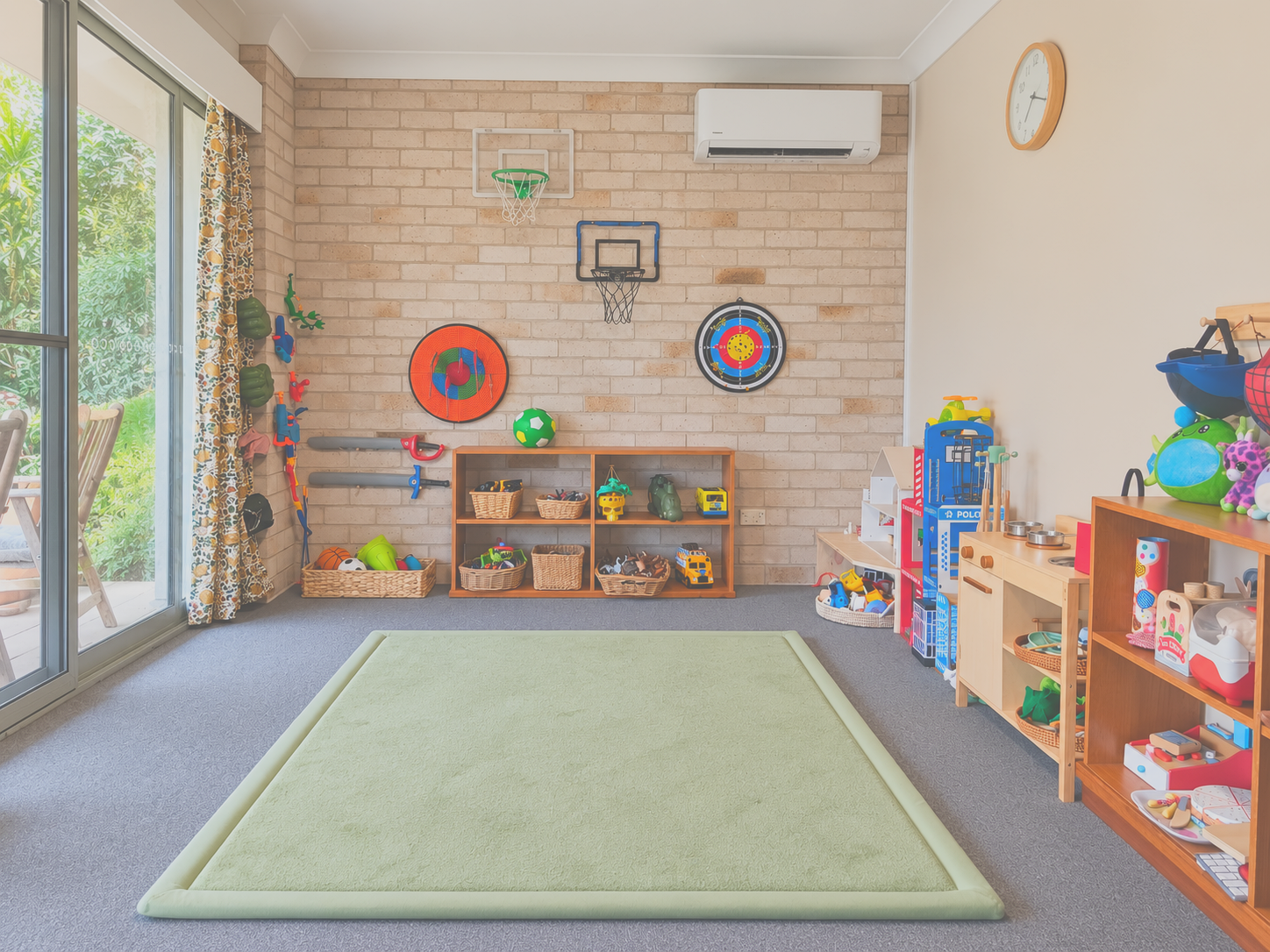
A space for big feelings, curiosity and connection.
The playroom is a calm, welcoming space where children can be themselves, explore through play and feel accepted just as they are.
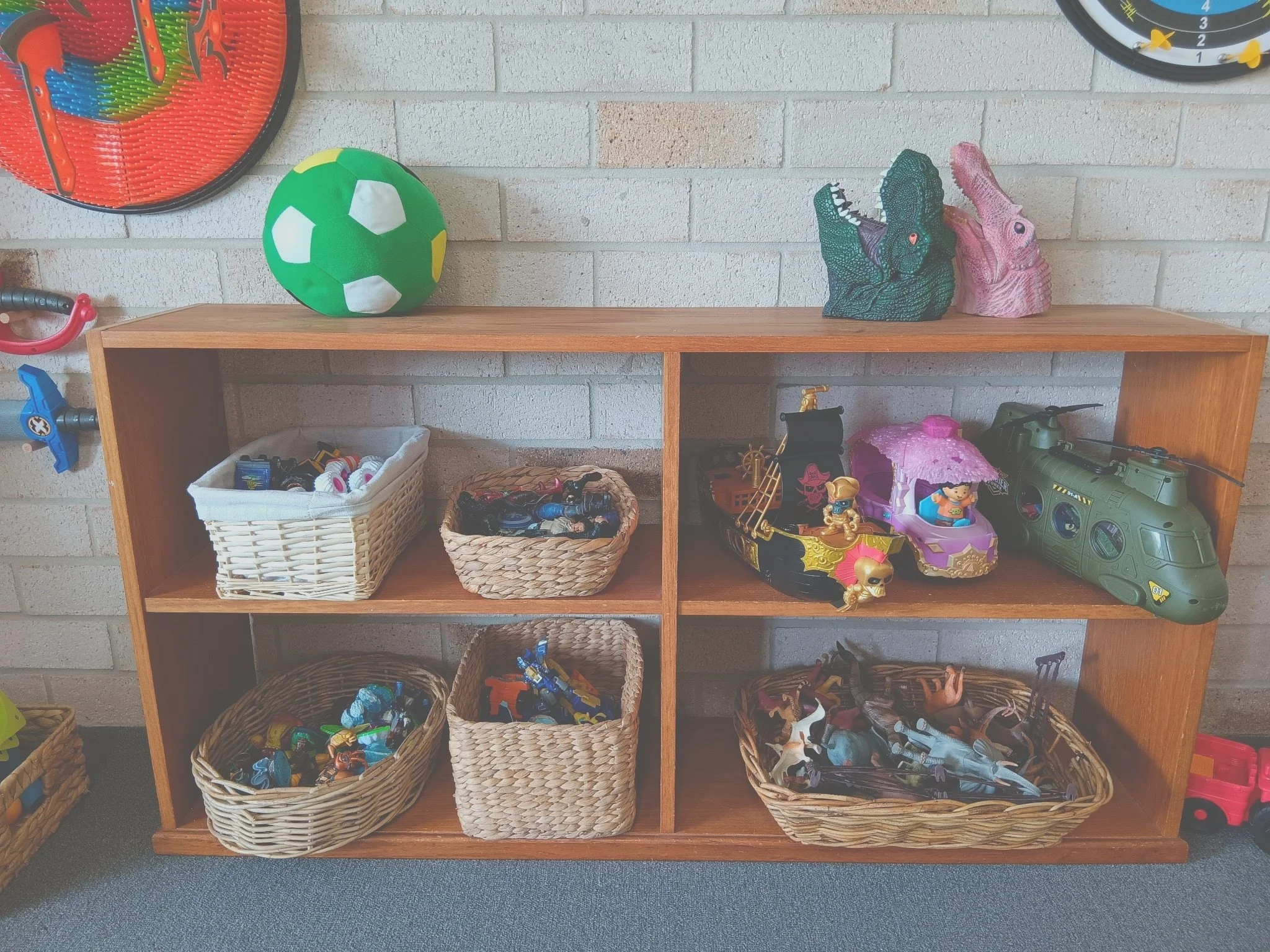
A space for every interest.
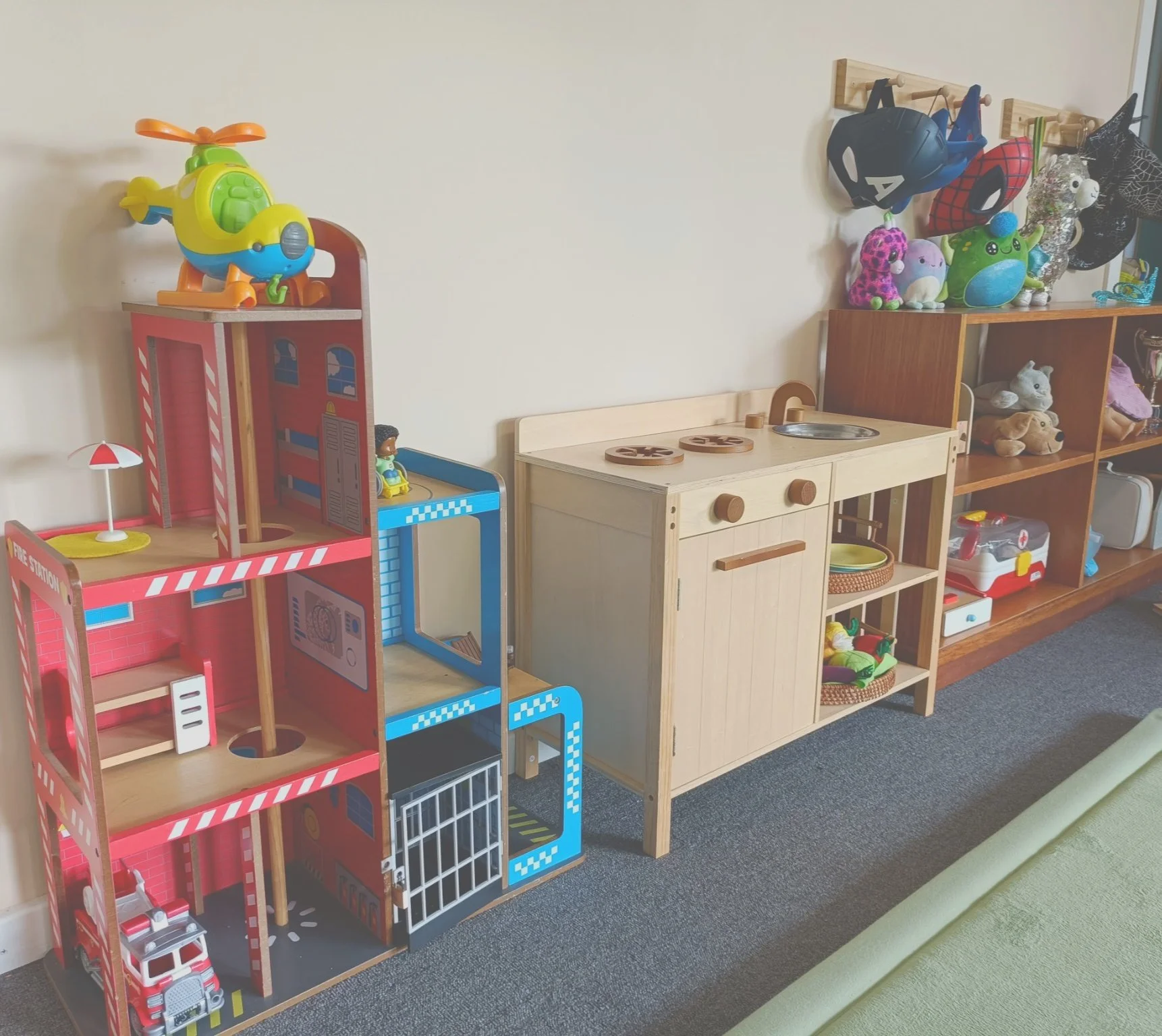
The playroom includes a variety of materials that support imaginative play, creative, emotional expression and problem solving. Everything is arranged and visually accessible, helping children to feel invited to explore and engage.
A peaceful place to wait.
Families are welcome to wait outside on the patio. The gives children a calm and unpressured transition into their session.

Designed and curated with children in mind.
The playroom is set up to be inviting, organised and accesible , allowing children to follow their interest and lead their play.